Introduction
Choosing an O-Ring material is not simply a matter of selecting NBR, FKM, EPDM, or Silicone from a catalogue. For industrial buyers and engineers, the real objective is to match the compound to the complete operating environment while controlling cost, lead time, validation requirements, and supply risk.
An O-Ring with the correct dimensions can still fail if its material is incompatible with the fluid, temperature, pressure, motion, or outdoor environment. At the same time, selecting the most expensive material does not automatically create the safest solution. Over-specification can increase purchasing cost and complicate sourcing without improving actual performance.
The following framework helps purchasing managers, design engineers, quality engineers, and OEM buyers evaluate O-Ring materials more systematically before requesting samples or approving mass production.
1. Start With the Application, Not the Material Name
Material selection should begin with the application conditions. A buyer may initially ask for an “NBR O-Ring” or an “FKM O-Ring,” but the material name alone does not confirm whether the compound is suitable.
Before discussing price, clarify:
– What equipment or assembly uses the O-Ring?
– Is the seal static, reciprocating, rotating, or exposed to vibration?
– What fluid, gas, lubricant, or chemical will contact it?
– What are the normal and peak temperatures?
– What pressure and pressure cycles are expected?
– Is the O-Ring exposed to sunlight, ozone, weather, steam, or vacuum?
– What service life and maintenance interval are required?
These questions help prevent a common sourcing mistake: choosing a familiar material before understanding the conditions it must survive.
2. Evaluate Chemical and Fluid Compatibility
Chemical compatibility is one of the most important factors in O-Ring selection. The wrong compound may swell, shrink, soften, harden, crack, or lose sealing force after exposure to the operating medium.
NBR is widely considered for mineral oils, petroleum-based hydraulic fluids, grease, and many general industrial applications. FKM is often evaluated for higher-temperature oils, fuels, and stronger chemical environments. EPDM is commonly considered for water, steam, weather exposure, and certain brake-fluid applications, but it is generally not selected for petroleum oils. Silicone offers a wide temperature range and flexibility but may not be the first choice where abrasion or tear resistance is critical.
Compatibility charts are useful as an initial reference, but they should not replace application-specific validation. Fluid concentration, additives, contamination, temperature, exposure time, and pressure can all change actual performance.
For critical projects, the buyer should provide the exact medium name or available safety data and confirm whether immersion testing or application testing is required.
3. Use Real Temperature Conditions
Temperature ratings in material tables are usually broad reference ranges. They should not be treated as a guarantee for every compound or application.
The correct review should include:
– Continuous operating temperature
– Short-term peak temperature
– Lowest startup or storage temperature
– Thermal cycling frequency
– Heat generated by friction or nearby components
– The combined effect of temperature and chemical exposure
For example, an NBR O-Ring may perform well in a moderate-temperature oil application, while FKM may be evaluated when higher temperature and oil resistance are required. However, extremely low-temperature performance may require a specially formulated compound rather than a generic material choice.
Always ask the O-Ring manufacturer or supplier to confirm the specific compound, not only the polymer family.
4. Consider Pressure, Motion, and Mechanical Stress
Material compatibility alone does not determine sealing reliability. Pressure, clearance, movement, friction, surface finish, and groove design also affect the result.
In high-pressure conditions, a soft O-Ring may extrude into the clearance gap. A harder compound or backup ring may be needed, but increasing hardness can affect installation, low-pressure sealing, and surface conformity.
In dynamic applications, buyers should also review:
– Sliding or rotating speed
– Lubrication condition
– Friction and heat generation
– Surface roughness
– Wear and abrasion risk
– Frequency and stroke length
An O-Ring designed for a static flange may not perform the same way in a reciprocating hydraulic application. The seal material, hardness, groove, and mating surface must be reviewed as one system.
5. Compare the Main Material Options
NBR
NBR is widely used because it offers a practical balance of oil resistance, mechanical properties, availability, and cost. It is often suitable for general industrial equipment, hydraulic systems, lubricants, and petroleum-based fluids within an appropriate temperature range.
FKM
FKM is often selected for higher temperatures, fuels, oils, and more demanding chemical conditions. It normally costs more than NBR, so the application benefit should justify the additional cost. Different FKM formulations can also provide different chemical and low-temperature performance.
EPDM
EPDM is commonly considered for water, steam, ozone, weather, and outdoor exposure. It can be a strong option for certain industrial and automotive fluids but is generally incompatible with petroleum-based oils.
Silicone
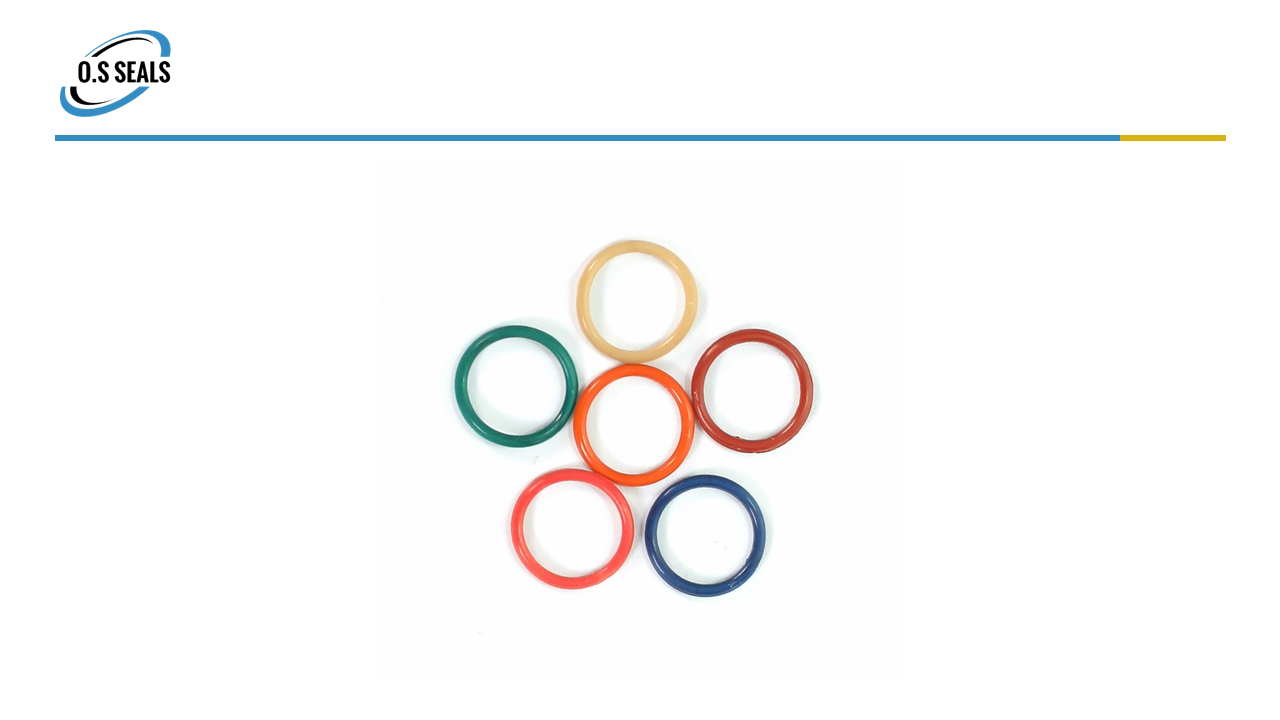
Silicone provides flexibility across a wide temperature range and is available in many colors. It is frequently considered for food, medical, electrical, or low-temperature applications when the compound and compliance requirements are appropriate. Its wear and tear resistance must be evaluated carefully in dynamic use.
HNBR, FFKM, PTFE, and PU
HNBR may provide improved heat, mechanical, and oil resistance compared with standard NBR. FFKM is considered for extremely demanding chemical and temperature environments but involves a much higher material cost. PTFE offers broad chemical resistance and low friction but behaves differently from elastomeric O-Rings. PU provides high abrasion and extrusion resistance for selected hydraulic and mechanical applications.
These materials should be selected because the application requires their properties, not simply because they appear more advanced.
6. Confirm Hardness and Compound Specification
Two O-Rings described as the same material can perform differently because of compound formulation, hardness, fillers, curing system, and manufacturing control.
The quotation and drawing should identify at least:
– Polymer family
– Required hardness and tolerance
– Color, if functionally important
– Applicable material standard or customer specification
– Certification or test-report requirements
– Special restrictions, such as prohibited substances
A typical hardness should not be assumed without reviewing the pressure, groove, assembly, and sealing conditions. Buyers should also avoid approving a sample only by color and appearance. Hardness, dimensions, material evidence, and application testing should be part of the approval plan.
7. Balance Performance, Cost, and Supply Risk
Procurement decisions must consider more than technical suitability. Material availability, minimum batch requirements, compound lead time, testing cost, production quantity, and future repeat orders can all affect the supply plan.
For example, a standard NBR compound may support faster sampling and more economical production for a general oil application. A special FKM or FFKM compound may require a higher minimum quantity, longer preparation time, or additional validation.
The best purchasing decision is not always the lowest unit price or the highest material grade. It is the option that provides sufficient performance with a manageable and repeatable supply process.
When requesting a quotation, provide both the initial order quantity and estimated annual demand. This allows the supplier to evaluate tooling, production method, material preparation, inspection planning, and packaging more responsibly.
8. Validate Before Mass Production
Material selection should end with validation, not with a catalog comparison.
A practical approval process may include:
1. Reviewing the drawing, groove, tolerance, and application data.
2. Confirming the proposed material and hardness.
3. Inspecting sample dimensions, appearance, and documentation.
4. Testing assembly fit with actual mating components.
5. Conducting functional testing under representative pressure, temperature, medium, and motion.
6. Recording the approved sample revision and acceptance criteria.
For high-risk applications, additional tests such as compression set, tensile properties, hardness, aging, immersion, or application endurance may be appropriate.
Clear approval records help keep the sample, technical specification, and mass-production standard aligned.
Conclusion
The right O-Ring material is selected by matching the complete application—not by choosing a familiar abbreviation or the highest-priced compound.
Industrial buyers should review chemical compatibility, real temperature conditions, pressure, motion, mechanical stress, hardness, compound specification, validation requirements, and long-term supply needs together.
A structured material review reduces the risk of leakage, premature failure, repeated sampling, unnecessary material cost, and production delays. It also creates a clearer basis for comparing quotations from different suppliers.
O.S Seals supports O-Ring, X-Ring, V-Ring, rubber cord, oil seal, bonded seal, and custom rubber part projects for industrial buyers. For material selection, drawing review, or quotation support, contact info@oilsealfactory.com.