O-Ring Compression Set: What to Confirm Before Approving a Compound
An O-ring can match the drawing, sit correctly in the groove, pass a dimensional check, and still leak after a few weeks in service. When that happens, the conversation usually moves to compression set.
Compression set is one of the few material properties that directly describes what happens to a seal after it has been squeezed. It is also one of the most frequently misread numbers on a rubber data sheet, because the figure means nothing without the conditions it was measured under.
This note explains what compression set measures, why the test conditions matter more than the headline number, and which details a buyer should confirm before approving a compound for an O-ring application.
What Compression Set Actually Measures
When an O-ring is installed, it is compressed between two surfaces. That compression is what generates the contact stress that keeps the seal tight. The rubber behaves partly elastically and partly viscoelastically: it pushes back, but not perfectly, and not forever.
Compression set measures the permanent deformation that remains after the compressive load is removed. A test specimen is compressed to a defined ratio, held at a defined temperature for a defined time, then released and measured after a recovery period. The result is usually expressed as a percentage of the original deflection that did not recover.
A low figure means the rubber returned close to its original thickness. A high figure means a significant part of the squeeze became permanent.
For a seal, residual deformation can reduce the ability to accommodate movement or dimensional changes. Compression set and compression stress relaxation are different measurements: one concerns recovered dimensions after release, while the other concerns sealing-force loss under maintained deformation. A set result alone does not establish the contact stress or predict leakage in a fixed gland.
A seal may look undamaged while its performance changes, but leakage requires assessment of the full assembly and operating conditions. Appearance and compression set alone do not identify the cause.
Why the Number Depends on the Test Conditions
A compression set figure without test conditions is not a property of the material in your application. It is a property of the material under one specific set of conditions.
Four variables change the result substantially:
Temperature. Set accumulates faster and more completely at higher temperature. A compound measured at 70 °C and the same compound measured at 150 °C can produce very different percentages, and both may be honestly reported.
Duration. A 24-hour test and a 70-hour test describe different stages of the same process. Rubber continues to relax over time, so a short test tends to understate long-term behaviour.
Compression ratio. The amount of squeeze applied during the test changes the result. A specimen compressed 25% is not comparable with one compressed 15%, even if every other condition matches.
Test standard and recovery time. Different standards specify different specimen geometry, recovery periods and calculation methods. Figures from different standards are not automatically interchangeable.
For a buyer, the practical consequence is simple: two suppliers can both report “compression set 20%” while describing two different materials under two different sets of conditions. The numbers are comparable only when the conditions are.
What the Figure Cannot Tell You
Compression set does not describe chemical compatibility. A compound with excellent set resistance can still swell or degrade in the wrong media.
It does not describe low-temperature behaviour. A material that holds its shape at operating temperature may become glassy and lose elasticity when cold.
It does not replace a functional test. Compression set is measured on a test specimen, not on your groove, your surface finish, your installation method, or your duty cycle.
It also does not predict field life on its own. Set interacts with groove design, compression ratio, surface roughness, lubrication, cycling and temperature profile. A compound with a moderate set figure in a well-designed groove can outperform a compound with a better figure in a poor one.
Material Choice: Where Set Fits In
Material selection normally starts with media and temperature, because those decide which elastomer families are even candidates. Compression set is the next filter, not the first.
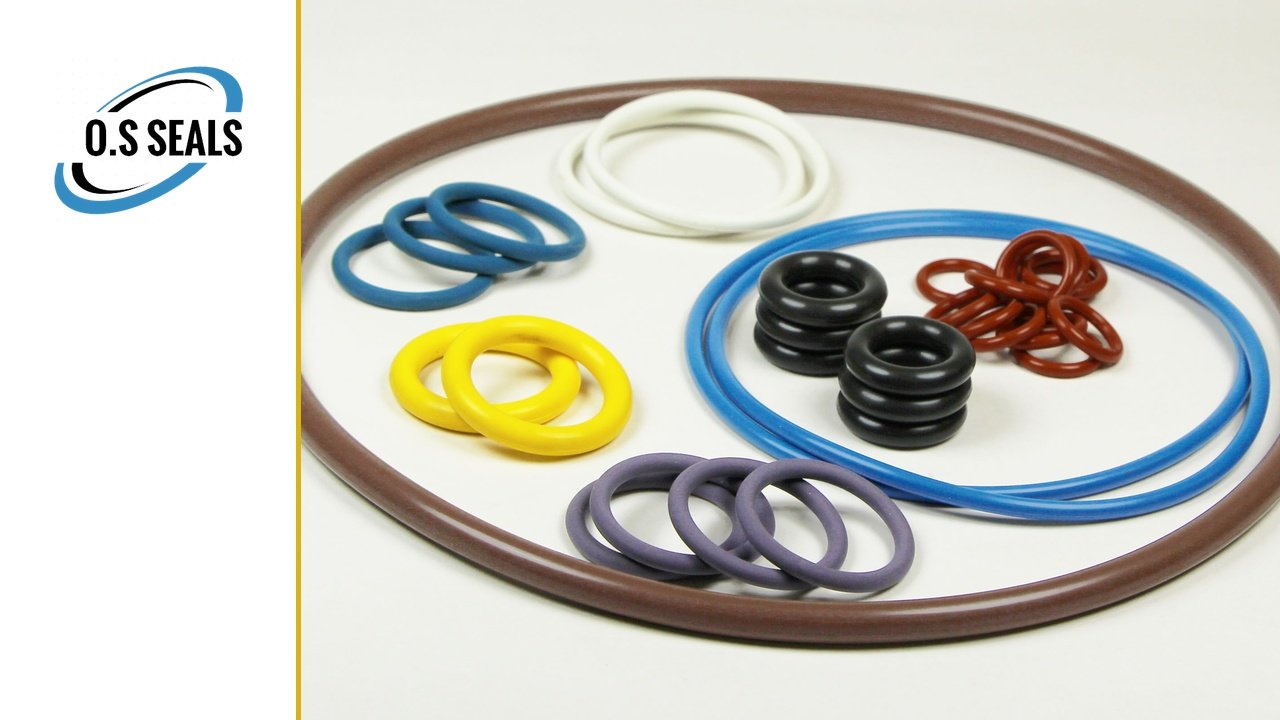
NBR remains a common choice for general industrial oil and air service within its temperature range. FKM is selected where temperature and chemical resistance requirements exceed what NBR can hold. EPDM is used where water, steam and weather resistance matter and oil resistance is not required. HNBR sits in applications needing better heat and mechanical performance than standard NBR.
None of these families has a single compression set value. Within each family, compound formulation, cure system, filler loading and hardness all change the result. Two FKM compounds from two suppliers can behave differently in the same groove.
That is why a material name is a starting point for discussion, not an approval. “FKM 70 Shore A” describes a family and a hardness. It does not describe the compound.
What to Ask a Supplier Before Approving a Compound
Five questions cover most of the risk:
First, under which conditions was the compression set measured? Ask for temperature, duration, compression ratio, standard and recovery time. If the supplier cannot provide them, the figure cannot be interpreted.
Second, how close are those conditions to the application? A figure measured far from the real operating temperature is an indication, not evidence.
Third, what compression ratio does the groove actually produce? This is a design question, and it is often where the real problem sits. A compound approved on a data sheet can still fail if the groove over-compresses or under-compresses it.
Fourth, what else is in the environment? Media, pressure, cycling, cleaning agents and intermittent high temperature all affect the outcome.
Fifth, who accepts the design basis? Purchasing can compare prices and lead times. The approval of a compound for a given application belongs to the party responsible for the design.
How Compression Set Interacts with Groove Design
Compression set does not act alone. The groove decides how much squeeze the O-ring receives, and the application decides how much of that squeeze is lost over time.
A groove that provides insufficient compression leaves little margin: once set develops, contact stress falls below what is needed to seal. A groove that over-compresses accelerates set and can damage the ring during installation.
Surface finish, eccentricity, and the stiffness of the mating parts also matter. A rigid flange holds compression better than a flexible cover. Surface texture outside the application requirements can create leakage risk that a compound change alone may not resolve.
This is why a compound cannot be approved in isolation from the hardware. The same material can be correct in one groove and marginal in another.
A Practical Approval Sequence
For a new application, a workable sequence looks like this:
Define the operating envelope: media, temperature range including peaks, pressure, movement, and expected service interval.
Calculate or confirm the compression ratio the groove produces at assembly.
Shortlist compounds that fit the media and temperature envelope, then compare compression set data measured under conditions close to the envelope.
Request a sample and confirm dimensions, hardness and appearance against the specification.
Run a functional evaluation in the actual hardware, or in a representative test rig, before releasing the part for series use.
Record which requirements were confirmed and which remain open. An assumption that enters a quotation has a way of becoming a requirement later.
What O.S Seals Can Help With
O.S Seals supplies O-rings in NBR, FKM, EPDM, HNBR, silicone and other elastomers, in standard and non-standard sizes. For an inquiry, we can review the application conditions you provide, identify which information is still missing for a compound discussion, and quote against a defined specification.
We do not treat a data sheet figure as an approval, and we do not describe a material as suitable for an application without the conditions that support the statement.
If you are reviewing an O-ring specification now, our O-ring range and material options are listed on the O-ring product page
Conclusion
Compression set explains a category of seal failure that dimensional inspection cannot catch: the ring fits, the material has simply stopped pushing back.
The figure is useful only when its test conditions are known, and it is only part of an approval. Media, temperature, groove compression, hardware stiffness and installation all decide whether a compound works in a specific place.
Before approving a compound, ask for the conditions behind the number, confirm the compression ratio in the actual groove, and agree who accepts the design basis. Those steps make the evidence and approval boundary clearer before production release.
To discuss an O-ring application, send the media, temperature range, compression ratio and movement type to info@oilsealfactory.com.