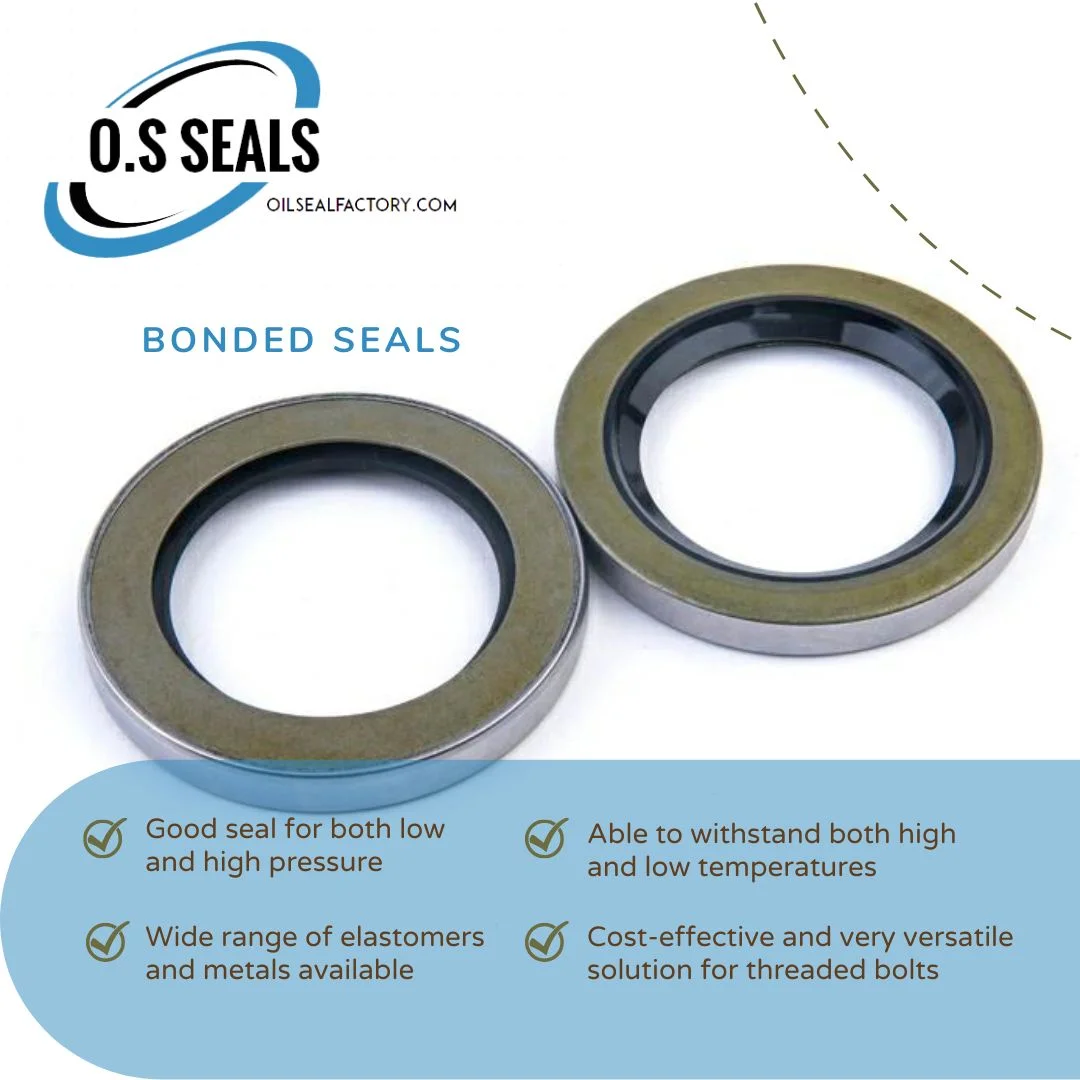
In the intricate world of bonded seals, making the right selection is paramount for ensuring optimal performance and longevity. At O.S Seals, we take pride in offering a comprehensive guide to aid you in this crucial decision-making process. Let’s explore the key factors that set our bonded seals apart in terms of materials, plating processes, and rigorous quality control.
Choosing the Right Material: A Foundation for Success
Selecting the ideal material lays the foundation for a high-quality bonded seal. Unfortunately, many suppliers prioritize profit over quality, opting for recycled rubber. At O.S Seals, we adhere strictly to industry standards, providing material reports for all our bonded seals. This commitment ensures that our materials meet the highest standards, avoiding the pitfalls associated with recycled rubber and varying hardness levels during production.
The Art of Plating: Elevating Durability and Aesthetics
The plating process is a critical aspect that influences the strength, conductivity, abrasion resistance, corrosion resistance, and overall appearance of bonded seals. While some suppliers settle for single-layer plating, O.S Seals takes pride in our double-layer environmentally friendly plating. This meticulous process results in a thicker zinc plating layer, detailed crystallization, uniformity, and a non-porous finish, enhancing corrosion resistance and ensuring long-lasting durability.
Factory-Quality Control: Elevating the Standard
Guaranteeing top-notch materials and a superior production process is only part of the equation. At O.S Seals, we go the extra mile with meticulous factory-quality control. Every bonded seal we produce undergoes a thorough individual inspection, ensuring that each product leaving our facility is 100% qualified. Our commitment to quality over profit underscores our dedication to preserving our customers’ reputations and instilling confidence in every purchase.

Elevate Your Sealing Solutions with O.S Seals
Compound, By What Runs Through The Port
Most bonded seal complaints come back to a compound chosen for price rather than for the medium. The washer is the same in every case; the rubber is what decides whether the joint holds.
| Compound | Works with | Avoid |
|---|---|---|
| NBR | Mineral oil, hydraulic oil, grease, air, water at low temperature | Brake fluid, phosphate ester, ketones, strong solvents |
| FKM | Fuels, high temperature oils, mineral acids, ozone | Phosphate ester, brake fluid, steam, hot water |
| EPDM | Water, steam, glycol, brake fluid, washing chemicals | Mineral oil and grease, which swell it badly |
| Silicone | Dry heat, air, some food contact | Most oils and fuels, and anything under pressure with mineral oil |
Two rules carry most of the decisions. A port that sees brake fluid cannot use NBR or FKM, which is why EPDM exists in this range at all. A port that runs above 100 °C in oil needs FKM, because NBR hardens and then cracks at the bead line rather than at the washer.
Washer Material And Plating
The metal carries the clamp load and the corrosion risk. Plating thickness is the difference between a joint that survives a winter on a machine and one that rusts at the edge and lifts along the bond line.
| Washer | Plating | Where it is worth the cost |
|---|---|---|
| Mild steel | Zinc, double layer | Indoor hydraulic ports, general assembly |
| Mild steel | Zinc-nickel | Mobile equipment, salt spray, washdown |
| Stainless 304 | None | Water, food equipment, light chemical |
| Stainless 316 | None | Marine, chloride, chemical and offshore |
A single-layer zinc coating looks identical in the carton and fails first. The double layer is thicker and non-porous, which is why we specify it as standard on the bonded seal range rather than as an option.
Where Bonded Seals Fail
The rubber is rarely the cause on its own. These are the six we see most often, and five of them happen at installation.
- Under-torque: the bead never reaches its designed compression, so the joint weeps at low pressure
- Over-torque: the bead splits or extrudes, and the failure looks like a material fault
- A damaged or painted spot face: the bead cannot seat, and no torque will fix it
- Reusing a seal that has already taken a set, which is the most common cause after a rebuild
- A washer thinner than the original, letting the fitting run deeper and crush the bead
- Thread sealant applied over the bead instead of on the thread
For the dimensions that decide whether a replacement actually fits, the tolerance guide covers the spot face and thread values. Send a photo of the old seal next to a rule and we can usually identify the size from the bead profile.
In your journey to select the perfect bonded seals, trust O.S Seals to be your guiding light. Our unwavering commitment to superior materials, environmentally friendly plating, and rigorous quality control sets us apart. Choose excellence, choose O.S Seals, and experience a new standard of durability and performance in your sealing solutions.